The Unseen Enterprise Drag
Technical debt is an invisible tax that compounds silently inside every software organization. Features shipped under tight deadlines leave behind quick hacks, outdated dependencies, unused functions, and unoptimized queries.
Over time, this accumulation slows overall execution:
- New feature additions take twice as long because engineers must navigate brittle, legacy logic.
- Onboarding new developers becomes a months-long ordeal of deciphering tribal knowledge.
- Security vulnerabilities linger in unpatched, legacy dependencies that nobody wants to touch for fear of breaking production.
+-----------------------------------------------------------------------+| THE COMPOUNDING TECH DEBT TRAP |+-----------------------------------------------------------------------+| Short Deadlines -> Quick Hacks -> Fragmented Repos -> Slower Velocity|| || Legacy Solution: Stop all feature work for 2-week Refactoring Sprints|| (Result: Business context changes, feature backlog grows, debt remains)|+-----------------------------------------------------------------------+
Traditionally, the solution was the dreaded refactoring sprint—stopping all feature development for two weeks to clean up the codebase. But in competitive markets, product managers rarely approve pausing feature work to fix hidden technical debt. As a result, the cleanup gets pushed back indefinitely, and legacy systems grow more fragile by the day.
Continuous Background Refactoring
Platforms like CodeMate replace periodic cleanup sprints with continuous background optimization.
Rather than waiting for a major system rewrite, autonomous agents operate like an invisible background autocorrect across enterprise repositories.
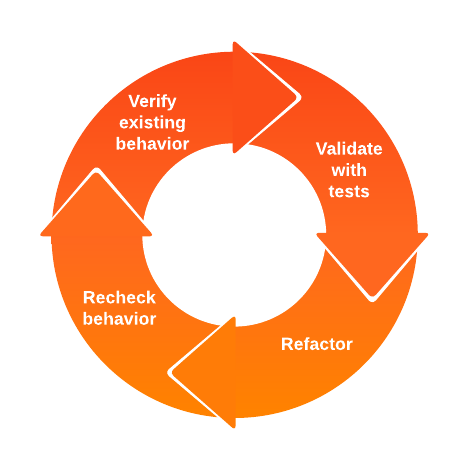
+-----------------------------------------------------------------------+| AUTONOMOUS BACKGROUND CLEANUP LOOP |+-----------------------------------------------------------------------+| 1. Idle System Detection -> Parse AST for Redundancies & Anti-Patterns|| 2. Generate Isolated Unit Tests -> Verify Behavior Matches Specs || 3. Apply Security Patches & Upgrade Outdated Dependencies || 4. Submit Pre-Validated, Low-Risk PR for Engineering Approval |+-----------------------------------------------------------------------+
How Autonomous Maintenance Operates:
- Continuous AST Scanning: The agent constantly scans repositories during developer downtime, flagging deprecated methods, duplicate logic, and unoptimized database queries.
- Automated Patch & Test Generation: When the agent flags an issue, it doesn’t just create an alert; it writes the refactored code alongside a complete suite of unit tests to prove system behavior remains unchanged.
- Low-Friction Pull Requests: The dev team receives concise, pre-tested pull requests that isolate individual fixes. Reviewing a 10-line optimization PR takes 30 seconds, making code maintenance a seamless part of daily workflows.
+------------------------+------------------------------------+-------------------------------------+| Cleanup Dimension | Reactive Refactoring Sprints | Autonomous Background Maintenance |+------------------------+------------------------------------+-------------------------------------+| Business Impact | Halts feature delivery completely | Zero disruption to roadmap velocity || Execution Style | High-risk, massive batch rewrites | Low-risk, micro-PR updates daily || Dependency Upgrades | Delayed by quarters or years | Patched automatically on release || Developer Morale | Frustrating, high-stress rewrites | Effortless, clean developer workflow|+------------------------+------------------------------------+-------------------------------------+
The Long-Term Advantage
Enterprise software maintenance is shifting from a high-stress fire drill to an automated, background baseline.
Organizations that deploy autonomous background agents transform their legacy codebases into self-healing assets. Instead of spending 40% of their engineering capacity simply fighting tech debt, teams can channel their full energy into shipping innovative features.
The enterprises that win won’t just be those with the largest engineering budgets. They will be the ones that automate code maintenance entirely, ensuring their software stack runs cleanly at scale.


Leave a Reply